- Jul 5
How to Help Aging Parents Before a Crisis Happens: A Nurse’s Practical Guide to Recognizing Early Changes
- Joanne De Rubeis
- 0 comments
Helping families plan ahead, stay informed, and support aging loved ones with confidence.
When most people think about caring for aging parents, they imagine a crisis: a fall, a hospitalization, a diagnosis, or a phone call in the middle of the night.
But aging often begins with small changes that are easy to miss.
A missed appointment. Less interest in cooking. More clutter in the home. Changes in mood, memory, mobility, appetite, hygiene, or energy.
These small changes matter.
Care starts now because planning ahead gives families more options, more peace of mind, and more time to support their loved ones with dignity and respect.
Aging Is a Journey, Not an Emergency
One of the biggest mistakes families make is waiting until something serious happens before starting important conversations.
A proactive approach allows older adults to have a voice in decisions about their health, home, safety, care, finances, and future.
It is not about taking over. It is about paying attention, asking thoughtful questions, and putting small supports in place before a crisis happens.
When families begin early, the conversations are usually calmer. Decisions can be made with more time, more information, and more respect for what the older adult wants.
Small Steps Can Make a Big Difference

Families do not need to solve everything at once. Start with simple, practical steps:
Check medications and make sure they are organized, current, and reviewed by a pharmacist.
Review upcoming medical appointments, specialist visits, blood work, and follow-up plans.
Look for home safety concerns such as clutter, poor lighting, stairs, rugs, bathrooms, or fall risks.
Notice changes in eating, hydration, mobility, mood, memory, hygiene, and sleep.
Watch for sudden confusion, weakness, agitation, or changes in behaviour, which may be related to infection, dehydration, constipation, medication side effects, or other health concerns.
Ask open-ended questions and listen without judgment.
Organize emergency contacts, medication lists, allergies, doctors, specialists, and important documents.
Talk early about Power of Attorney, future care wishes, and what matters most.
Even one small step can make daily life safer and less stressful.
Start the Conversation Early

Instead of saying, “You need help,” try asking:
How are things going lately?
Is anything becoming more difficult?
What would make life easier?
How can I support you?
What matters most to you as you think about the future?
These conversations help preserve independence, dignity, and trust.
The goal is to work with your parent, not around them. When older adults feel included and respected, they are often more open to support.
Care Starts with Awareness
Supporting aging parents is about looking at the whole person. Changes may show up in health, mood, mobility, nutrition, medications, appointments, home safety, finances, or household routines.
Often, it is not one major issue that signals a need for support, but a pattern of small changes over time.
By noticing these changes early, families can plan ahead, involve the right supports, and help their loved ones remain safe, independent, connected, and involved in decisions about their own care.
Care does not always begin with providing hands-on help. Sometimes it begins with noticing, listening, organizing, and gently starting the conversation.
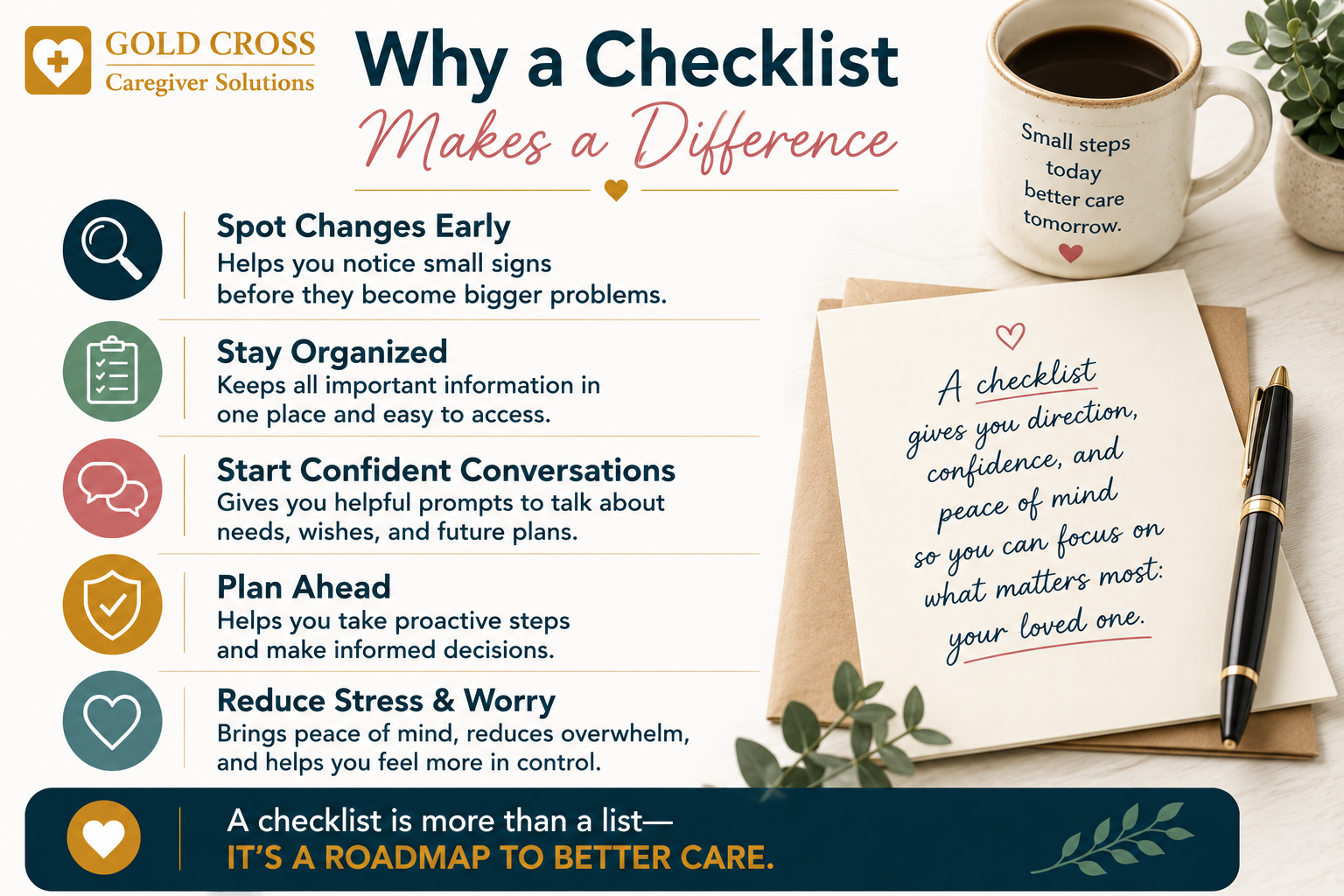
Why a Checklist Can Make Care Feel More Manageable
Caring for an aging parent can sometimes feel overwhelming. There are appointments to remember, medications to review, conversations to have, and changes that may happen gradually over time.
A checklist provides a practical place to start.
It helps you stay organized, recognize early changes, and focus on the areas that matter most. Rather than wondering if you’ve forgotten something, a checklist gives you a clear roadmap for observing changes, asking important questions, and planning ahead.
Most importantly, a checklist helps shift families from reacting to a crisis to preparing with confidence. Small observations made today can help prevent bigger challenges tomorrow and support your loved one in remaining safe, healthy, and as independent as possible.
A checklist isn’t about expecting the worst—it’s about being prepared, staying informed, and knowing what to watch for. Sometimes, the smallest observations can make the biggest difference.
Final Thoughts
Supporting an aging parent isn’t about having all the answers. It’s about being present, paying attention, and taking one small step at a time.
The earlier families begin planning and having conversations, the more choices they often have. Small actions today can help prevent bigger challenges tomorrow while preserving independence, dignity, and quality of life.
Remember, aging is a journey—not an emergency. Care doesn’t begin when a crisis happens. Care starts now.
Download the Free Aging Parents Checklist
To help families know what to watch for, I created the free Care Starts Now™ Aging Parents Checklist.
It includes practical signs to look for, conversation starters, and action steps to help families plan ahead before a crisis happens.
Download your free checklist today.
Joanne De Rubeis, RN, BScN
Owner, Gold Cross Caregiver Solutions
Senior Care Consultant & Educator
Author of Care Starts Now